Author: realdavidbryansmith

  • The Military Sleep Method, Explained Properly

    You have probably seen the short version. Relax your face, drop your
    shoulders, breathe out, relax your legs, clear your mind for ten
    seconds. Somebody posts it, it gets a million views, and about four
    people ever try it twice.

    The sequence is real. The instructions floating around are not wrong
    so much as stripped. They tell you the steps without telling you what
    the steps are for, and a procedure you don’t understand is a procedure
    you abandon the first night it doesn’t work.

    So here it is properly.

    What it actually is

    It is a progressive relaxation sequence with a mental component at
    the end. It came out of a training context where people needed to rest
    in bad conditions, on short notice, with noise and adrenaline in the
    environment. That is the whole origin story. It is not ancient, it is
    not secret, and nobody classified it.

    What matters is the design. It moves in a fixed order, top to bottom,
    and it finishes by parking your attention somewhere harmless. Every part
    of that is deliberate.

    Why it starts at the face

    I spent a lot of years as an electrician before I ever stood on a
    stage. When something in a house misbehaves, you don’t start at the far
    end of the run. You start where the most is happening.

    Your face is where the most is happening.

    There is more fine muscle control packed into your face than almost
    anywhere else on your body, and those muscles are wired tightly to how
    you feel. That connection runs both directions. Your face reports your
    state, and your state reads your face. Clench your jaw and your body
    treats it as information.

    Here is the part people miss: most of that tension is invisible to
    you. You are not aware of your jaw. You are not aware that your tongue
    is pressed against the roof of your mouth, or that the small muscles
    around your eyes have been braced since two in the afternoon. It has
    been held so long it reads as neutral.

    Start at the face and two things happen. You cut the largest single
    source of holding, and you get feedback. When your jaw finally lets go,
    you feel it let go. That felt release is the whole engine of the
    sequence. It teaches you the difference between held and not held, which
    is a distinction most adults have quietly lost.

    Start at your feet instead and you get almost nothing. Your feet were
    not doing much. Nothing releases, you feel nothing, and you conclude the
    technique doesn’t work on you.

    The sequence, step by step

    One. The face. Forehead first. Let the space between
    your eyebrows go slack. Then your eyes, the lids and everything around
    them. Then your cheeks. Then your jaw, which usually takes a few seconds
    longer than you expect. Then your tongue, which should end up resting
    loose in the floor of your mouth rather than pushed anywhere.

    Do not force any of it. You are not pulling these muscles into
    position. You are stopping the signal that has been holding them.

    Two. The shoulders and arms. Let your shoulders drop
    toward the mattress. Not down and forward, just down, out of your ears.
    Then your upper arms go heavy, then your forearms, then your hands. Let
    your fingers finish wherever they finish. Curled is fine.

    Three. The chest and the breath. Breathe out and let
    your chest fall with it. You are not doing a breathing exercise here.
    You are simply stopping the small amount of work most people put into
    holding their ribcage up. One long exhale usually does it.

    Four. The legs. Thighs, then calves, then feet. By
    this point the release tends to run downhill on its own, because you
    have taught your body what you are asking for.

    Five. The mind. Ten seconds of stillness. This is
    the step that gets butchered.

    You are not clearing your mind, because you can’t. Try to have no
    thoughts and you will produce thoughts about having no thoughts. Instead
    you give your attention one boring thing to hold. A still image works
    best. A dark room. A hammock strung between two trees, not moving. Some
    people repeat one flat, meaningless phrase over and over.

    Boring is the requirement. Anything interesting invites you to think
    about it, and thinking is the thing you are trying to step out of.

    Why it works, mechanically

    Your conscious mind is rehearsing tomorrow, replaying today,
    problem-solving in a context where problem-solving is useless. The
    harder you try to stop, the worse it gets. That’s not a willpower issue.
    That’s how the brain is wired.

    You cannot argue your way out of that loop, because arguing is more
    of the same activity. What you can do is give the loop less to run on.
    Muscle tension is fuel. Take away the tension and the loop loses some of
    its input. Then you occupy the narrow channel of your attention with
    something that goes nowhere.

    That is the whole design. Reduce the physical input, then park the
    attention. It is a wind-down ramp, not a switch.

    Nobody has an off switch. That is worth accepting early, because most
    of the frustration people feel at night comes from looking for one.

    How to practice it

    Here is the part that gets left out entirely, and it is the reason
    most people decide the method failed.

    Practice it during the day. This is a motor skill.
    You are teaching yourself to recognize and release tension on command,
    and you will learn it faster sitting in a parked car at two in the
    afternoon than lying in the dark at midnight with something riding on
    the outcome.

    Practice it when nothing is at stake. The moment you
    need it to work, you start monitoring whether it is working, and
    monitoring is a form of effort. Effort is the opposite of what you are
    doing.

    Give it weeks, not nights. You would not expect to
    play a chord cleanly on your third attempt. Same thing here. The first
    several times, you will get partway down your body and realize you have
    been planning a conversation. That is normal. Go back to the last body
    part you remember and keep going.

    Don’t check the results. Falling asleep is not the
    goal of a practice session. Getting good at the sequence is the goal.
    Sleep is a side effect, and side effects arrive when you stop watching
    for them.

    Do the whole thing. People drop the face because it
    feels silly and drop the mental step because it feels like nothing.
    Those are the two steps doing the work.

    A last thing worth saying plainly: this is a relaxation practice, and
    it works on the mental side of sleep. If you suspect an actual sleep
    disorder, if you snore heavily, wake up gasping, or feel wrecked all day
    no matter how long you were in bed, see a doctor. That is a physical
    question and it deserves a physical answer.

    Start Tonight

    I made a free guided session called The Military Sleep
    Method
    . It runs eleven minutes, walks you through the whole
    sequence in my voice, and comes with the Nightly Wind-Down Checklist so
    you know what to do with the hour before bed.

    Both are free here: https://davidbryansmith.com/free-track-download/

    If you use it and want more, The Sleep Reset Program is seven guided
    sessions that build on the same approach. It’s at https://davidbryansmith.com/product/bst-better-sleep-tonight/
    whenever you’re ready. No rush. Start with the free one.

  • The Layoff Spiral and Your Sleep: A Body-Level View

    The Layoff Spiral and Your Sleep: A Body-Level View

    # The Layoff Spiral and Your Sleep

    You opened LinkedIn at 3 AM “just to check.” You’re not sure what you were checking for — your company hasn’t announced anything, your role hasn’t changed, your manager hasn’t said a word. But the news cycle has been full of layoffs for two years now, and the algorithm has been feeding you posts about people you went to college with getting “restructured” out of jobs they gave ten years to, and your brain has decided — without asking you — that the next round could include your name.

    You scroll. You read the posts. You compare your situation to theirs. You close the app. You open it again. You update a word in your headline. You close it again. The alarm is at 6:30. You will not feel rested.

    The layoff hasn’t happened. Your body is already rehearsing it.

    ## The Spiral Has a Structure

    This isn’t unique to you. The data on what’s been called “layoff anxiety” is consistent across the last three years — not just in tech, not just in finance, but across every sector where the rounds have been announced. People whose jobs are technically intact are losing sleep over jobs they may never lose. The 3 AM check-in is now a cultural habit. The “should I update my LinkedIn” thought is now an ambient background process.

    For women in the workforce, the layer is doubled. The job-insecurity spiral runs on top of the second shift — the household, the kids, the parents, the appointments that don’t make themselves. So the body is rehearsing a potential loss while still carrying the full load of the present. There is no bandwidth left for the rehearsal. The rehearsal takes it anyway.

    You don’t need to be facing an actual layoff to be losing sleep over one. You just need to be paying attention.

    ## Anticipatory Grief Is a Body Event

    When the body can’t tell whether a threat is real, it treats the threat as real. That’s the operating principle of anticipatory grief — the nervous-system process of rehearsing a loss that hasn’t happened. It’s not a thinking problem. It’s a chemistry problem.

    Cortisol stays elevated. Heart rate variability drops. The sympathetic system stays activated in case the threat materializes. The freeze response — the body’s “hold still and outlast” mode — kicks in. Sleep architecture degrades. You spend more time in light stages and less in deep recovery. You wake up physiologically older than when you lay down.

    This is the same system the [sleep system failure pillar](/sleep/sleep-system-failure) breaks into four components, and the sympathetic-activation piece is the one that fails first under sustained load. You can take the right supplements. You can get eight hours in bed. None of it moves the needle if your body is still scanning for the layoff that may never come.

    ## What RTO Mandates Do on Top of It

    The return-to-office mandates made this worse. They added a new variable without removing any of the existing ones. Now the spiral isn’t just “will I be laid off” — it’s “will I be required to do a job I built my life around not doing, in a building that’s farther from the people I take care of, with a commute that takes two hours a day I don’t have.”

    For women carrying the second shift, RTO isn’t just a commute. It’s a logistics problem with no good answer. Someone has to be at the school pickup. Someone has to be at the parent’s appointment. Someone has to make the dinner. The RTO mandate didn’t take that away — it just made the math impossible.

    The body doesn’t solve logistics problems. It just runs the stress response.

    ## A Note on What This Isn’t

    This post is not career coaching. I’m a hypnotist, not a recruiter, not a career strategist, and not a workplace-policy commentator. I won’t tell you whether to update your LinkedIn, whether to start interviewing, whether to take the RTO fight to HR, or whether to wait it out. Those are decisions for you, your advisor, your family, and the situation you’re actually in.

    What I can tell you is what the spiral is doing to your nervous system — because that part is almost never discussed in layoff-coverage, and it matters more than the next LinkedIn post you’re going to read at 3 AM.

    ## The Reframe

    Stop asking “should I be worried about my job?”

    Start asking “is my body running a layoff drill that hasn’t been called?”

    The first question is strategic. The second is physiological. Only the second has a solution you can act on tonight.

    Job-loss anxiety lives in your body before it lives in your career. Until your nervous system gets a credible signal that the on-call shift is over, no amount of strategic clarity will deliver rest. The 3 AM LinkedIn spiral isn’t rational — it’s a stress response, and it responds to nervous-system interventions, not better information.

    ## The Three Things That Actually Move the Needle

    In order of leverage:

    1. **Hard cut-off on the career-news scroll after a chosen hour.** The algorithm doesn’t sleep. You can.
    2. **Externalize the spiral before bed.** Paper, not phone. Five minutes. Write down the worst-case scenarios, the calls you keep not making, the financial questions you’ve been carrying. The brain releases it because it trusts paper more than memory.
    3. **A real wind-down signal.** The body’s stress response runs on input. Give it something credible — a ritual that signals the day is done and the on-call shift is over.

    None of these will bring back the job market you were promised. They don’t fix RTO mandates. They don’t make hiring easier. What they do is give your nervous system a fighting chance to power down — which is the only way your sleep comes back.

    The layoff may not happen. But your sleep is happening tonight. Choose that one.

    **If the spiral is the nightly event and you want a tool that’s built for the anticipatory-grief nervous system, [Better Sleep Tonight](/sleep/better-sleep-tonight) is the protocol I built for this exact pattern.**

    — David Bryan Smith
    The Sleep Better Protocol

    Start tonight — free

    I recorded The Military Sleep Method — the aviator relaxation sequence, start to finish, as an 11-minute guided session. It comes with the Nightly Wind-Down Checklist: nine steps that tell your nervous system the day is over.

    Get both free →

    If it is every night rather than one night, The Sleep Reset Program is seven guided sessions — one per night — that retrain what your mind does at bedtime.

    This article is for general relaxation and wellness. It is not medical advice. If you suspect a sleep disorder such as sleep apnea, please see your doctor.

  • The World Won’t Let You Sleep Either: News and HRV

    The World Won’t Let You Sleep Either: News and HRV

    # The World Won’t Let You Sleep Either

    The push alert woke you up at 2:14 AM. You don’t remember rolling over to check it. Your body did it for you. The headline had the shape of every other headline for the last four years — another strike, another reversal, another country you can’t quite locate on a map making a decision that will land on your grocery bill by Friday. The alert was off one country and onto the next. The news cycle kept going. Your nervous system did not get to clock out.

    You weren’t asleep anyway.

    You’ve been half-awake since the headlines started stacking. The election cycle that never really ended. The policy whiplash that arrives in waves you can’t prepare for. The climate disasters that keep arriving in places you know people. The NATO headlines that feel like weather — something happening to someone, somewhere, always. You read them, you feel them, and then you put the phone down and try to sleep. The phone picks itself up again twenty minutes later.

    It’s not that the world is more dangerous than it was. It’s that the threat signal is now always on.

    ## The News Cycle Lives in Your Body

    Here’s what the news doesn’t tell you about itself: it has optimized for the 2 AM scroll. The push alerts, the autoplay videos, the infinite scroll, the headline cadence designed to keep you reading past the point where you meant to stop — none of it is built for your information. It’s built for your attention. And your nervous system is not built to tell the difference.

    A headline about a strike in a country you’ve never visited triggers the same threat-response cascade in your body as a strike in your own neighborhood would have triggered a hundred years ago. Cortisol. Heart rate variability drop. Sympathetic activation. The freeze-or-flee preparation. The body mobilizes the same chemistry whether the threat is on your doorstep or on a screen.

    But there’s nowhere to flee to. And so the chemistry stays elevated. And the next alert arrives. And the next.

    This is not a flaw in your resilience. It’s the system doing exactly what it was built to do, in an environment it was never built for.

    ## HRV Drops Before You Notice

    You can feel the symptoms before you have language for them. The tightness in your chest when you read a headline about a country three time zones away. The way your jaw clenches at a notification you didn’t mean to look at. The restless sleep that doesn’t quite wake you but doesn’t quite rest you either. The mornings that start heavy for no reason you can name.

    The biomarker story is consistent. People under sustained news exposure show measurably lower heart rate variability than people who are not. They spend more of their sleep in light stages and less in the deep, restorative ones. They wake up physiologically more stressed than when they lay down. Cortisol patterns flatten in ways that signal chronic sympathetic activation — the system is stuck in defensive mode, even during sleep.

    This is the same sympathetic-activation pattern the [sleep system failure pillar](/sleep/sleep-system-failure) breaks down into four components — and it’s the one that fails first under sustained load. You can take the right supplements. You can get eight hours in bed. None of it moves the needle if the threat signal is still live.

    You didn’t sign up for this. You turned on the alerts because you wanted to know. You opened the app because you wanted to stay informed. The body signed up for the cascade, and the cascade doesn’t have an off switch you can reach from the couch.

    ## The 24/7 News Cycle Is a Stress-Response Engineering Problem

    The news cycle isn’t a journalism problem anymore. It’s a stress-response engineering problem. The product has been optimized to maximize time-on-platform, which means maximizing the duration of your threat response. Every feature — the autoplay, the infinite scroll, the push alerts, the “you might also like” recommendations — is designed to keep your nervous system in a low-grade activated state.

    The platforms don’t call it that. They call it engagement.

    Your body calls it survival mode.

    The two are not compatible with sleep. They were never compatible with sleep. The only thing that’s changed is the delivery system — and the delivery system now lives in your pocket, on your nightstand, and inside your hand the moment your eyes close.

    ## The Reframe

    Stop asking “why does the world feel so dangerous?”

    Start asking “why does my body feel like the threat is here?”

    The world is what it is. You can’t out-policy the headlines. You can’t out-scroll the cycle. You can’t undo the alert architecture of your phone from the couch at 2 AM.

    What you can do is give your nervous system a credible signal that the on-call shift is over. Not a “don’t worry, it’s fine” — your body knows that’s not true. A signal that says: *I have seen what is coming. I have made what decisions I can. The day is done. The system can stand down.*

    That’s what a real wind-down protocol is for. Not a checklist. A signal the body will accept.

    ## The Three Things That Actually Move the Needle

    In order of leverage:

    1. **Hard off-switch on the news cycle after a chosen hour.** Pick a time. Mine is 8 PM. After that, the news doesn’t get a slot. The headlines will still be there in the morning. They will not be improved by you reading them at 11.
    2. **Phone out of the bedroom, or at minimum, face-down and on Do Not Disturb.** The 2 AM push alert is not information. It’s an interruption the body treats as an emergency.
    3. **The Nightly Wind-Down Checklist.** Light reset, mental offload, physical signal. The ritual is the off-switch the nervous system has been waiting for.

    None of these will change the world. They will not bring stability to the headlines. They will not fix the news cycle or the policy whiplash or the climate disasters. What they do is give your body a fighting chance to power down — which is the only way your sleep comes back.

    The world is loud. Your sleep doesn’t have to be.

    **If you want The Nightly Wind-Down Checklist as a printable PDF, [download it free here](/sleep/3-minute-nighttime-ritual).** Run it for seven nights. See what changes when the system finally gets a credible all-clear.

    — David Bryan Smith
    The Sleep Better Protocol

    Start tonight — free

    I recorded The Military Sleep Method — the aviator relaxation sequence, start to finish, as an 11-minute guided session. It comes with the Nightly Wind-Down Checklist: nine steps that tell your nervous system the day is over.

    Get both free →

    If it is every night rather than one night, The Sleep Reset Program is seven guided sessions — one per night — that retrain what your mind does at bedtime.

    This article is for general relaxation and wellness. It is not medical advice. If you suspect a sleep disorder such as sleep apnea, please see your doctor.

  • When the Markets Won’t Let You Sleep: A Nervous-System View

    When the Markets Won’t Let You Sleep: A Nervous-System View

    The headline was on your phone before your feet hit the floor. Layoffs at a company you’ve never worked at, but in a sector you’ve spent twenty years building a career in. Your 401(k) is down again. Your rent went up. The grocery bill that used to be $140 is $214 and the math doesn’t feel temporary. Your employer announced a return-to-office mandate that doesn’t fit your life, and the conversation you’re not having with your partner is whether one of you should switch jobs in a market that isn’t hiring.

    It’s 3 AM and you’re doing the math again. Not the math your financial advisor would do — the math at 3 AM never uses the spreadsheet. It’s the math that runs in your body. Can I actually retire? Can I afford to leave this job? What happens if the next layoff is mine?

    You didn’t sign up for this. You did everything you were told. And the math doesn’t work the way it was supposed to.

    You’re not bad with money. You’re a mammal under threat.

    The Spiral Is Physiological, Not Financial

    Here’s what the financial-press version of this story gets wrong: it treats the 3 AM spiral as a thinking problem. As if the right spreadsheet, the right asset allocation, or the right amount of information would settle the nervous system.

    It won’t. Because the spiral isn’t happening in your prefrontal cortex. It’s happening in your limbic system — the part of your brain that doesn’t speak in numbers. It speaks in cortisol.

    When your nervous system reads sustained economic uncertainty — inflation that doesn’t break, layoffs that don’t stop, savings that deplete, a job market that punishes switching — it stays locked in sympathetic activation. The freeze response. Heart rate variability drops. Cortisol stays elevated. The body prepares to outlast something, because from where it sits, that’s what you’re doing.

    This isn’t weakness. This is biology doing what it evolved to do. The problem is that the threat it’s responding to — an economy that won’t stabilize — has no end in sight. So the system never gets the all-clear.

    What HRV Has to Do With Your Retirement

    Heart rate variability — the variation in time between heartbeats — is one of the cleanest biomarkers of recovery. High HRV means your nervous system is flexible, adaptable, dropping into parasympathetic mode overnight and coming back online in the morning. Low HRV means the system is stuck in defensive mode, even during sleep.

    For people under sustained financial stress, HRV stays low. Sleep architecture degrades. The body spends more time in light stages and less in the deep, restorative stages. You can be in bed for eight hours and wake up physiologically older than when you lay down.

    This is the same system the sleep system failure pillar breaks down into four components — and the sympathetic-activation piece is the one that fails first under sustained load.

    The market doesn’t know this. Your advisor probably doesn’t talk about it. But your body is keeping the books, and the books are bad.

    The Freeze Response Is Not a Strategy

    When the body reads a threat it can’t fight or flee, it freezes. The freeze response is older than money, older than markets, older than spreadsheets. It shuts down digestion. It raises baseline cortisol. It narrows attention to the threat and drops bandwidth for everything else.

    In 2026, the threat is diffuse. It’s inflation that didn’t break. It’s a labor market that punishes movement. It’s savings that took a decade to build and eroded in a year. It’s the slow realization that the math you were sold — work hard, save consistently, retire at 65 — may not produce the outcome you planned.

    You can’t outrun a diffuse threat. So the freeze response stays on. And your sleep becomes the bill.

    A Note on What This Isn’t

    This post is not financial advice. I’m a hypnotist, not a fiduciary. I won’t tell you what to do with your portfolio, your job, or your relationship with money. If you’re making decisions in those domains, talk to a qualified advisor.

    What I can tell you is what the financial stress is doing to your nervous system, because that part of the picture is almost never discussed in financial writing — and it matters more than the spreadsheet you’re checking at 3 AM.

    The Reframe

    Stop asking “can I afford to retire?”

    Start asking “is my nervous system affording to keep running like this?”

    The first question is a math problem. The second is a physiology problem. Only the second has a solution you can act on tonight.

    Financial stress lives in your body before it lives in your portfolio. Until your nervous system gets a credible signal that the threat has been acknowledged and contained, no amount of financial planning will deliver rest. The audit you run at 3 AM isn’t rational — it’s a stress response, and it responds to nervous-system interventions, not better information.

    The Three Things That Actually Move the Needle

    In order of leverage:

    1. Name it as a body event, not a money event. When the spiral starts, label it: “this is cortisol, not a financial plan.” It doesn’t stop the spiral, but it puts you back in the driver’s seat.
    2. Externalize the audit before bed. Paper, not phone. Five minutes. Write down the open financial questions, the worst-case scenarios, the calls you keep not making. Get them out of your head and onto paper where the brain can release them.
    3. A real wind-down signal. The body’s stress response runs on input. Give it something credible — a ritual that signals the day is done and the on-call shift is over. The Nightly Wind-Down Checklist is built for exactly this.

    None of these solve the economy. They don’t restore your 401(k). They don’t bring back the job market you were promised. What they do is give your nervous system a fighting chance to power down — which is the only way your sleep comes back.

    The math may not be solvable tonight. But your sleep can be.


    If the spiral is the nightly event and you want a tool that’s built for the on-call nervous system, Better Sleep Tonight is the protocol I built for this exact pattern.

    — David Bryan Smith The Sleep Better Protocol

    Start tonight — free

    I recorded The Military Sleep Method — the aviator relaxation sequence, start to finish, as an 11-minute guided session. It comes with the Nightly Wind-Down Checklist: nine steps that tell your nervous system the day is over.

    Get both free →

    If it is every night rather than one night, The Sleep Reset Program is seven guided sessions — one per night — that retrain what your mind does at bedtime.

    This article is for general relaxation and wellness. It is not medical advice. If you suspect a sleep disorder such as sleep apnea, please see your doctor.

  • 3 AM and Still Running the List: Sleep and Mental Load

    3 AM and Still Running the List: Sleep and Mental Load

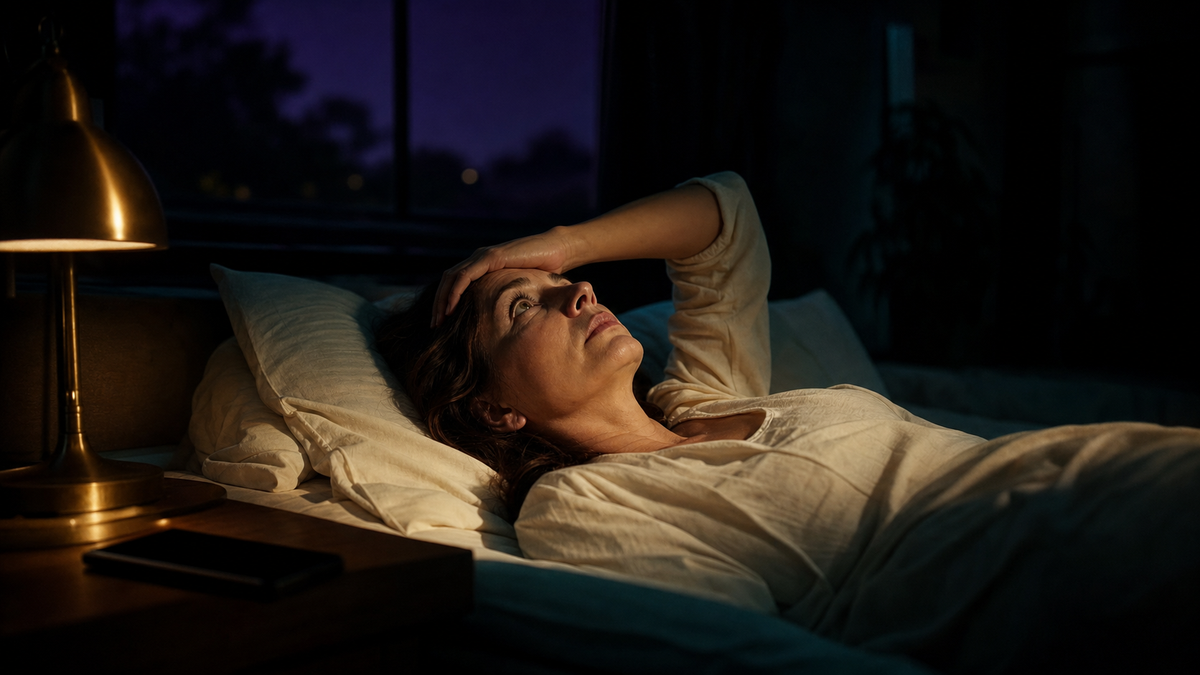
    You finally put the phone down at 11:15. You were the last one awake because somebody had to be. The school permission slip is signed. The parent-teacher conference is rescheduled. Your mother-in-law’s cardiology appointment is on the calendar for Thursday. The dentist reminder that you missed last week is now overdue. Your team’s Q3 deck is 60% done and your boss pinged you at 9:47 PM “just to check in.” The dinner dishes are drying on the rack.

    You close your eyes.

    The list shows up.

    Not the one on the fridge. The one in your head — the running ledger of everything that would fall apart if you stopped being the one carrying it. Kids’ schedules. Parents’ medications. The household that runs on your memory. The job that runs on your responsiveness. The mental load you didn’t agree to in writing but can’t put down because no one else has picked it up.

    By 3 AM you’re scrolling your phone because at least the scroll quiets the list for ten seconds at a time. The alarm is at 6:30. You will not feel rested.

    You’re not broken. You’re load-bearing.

    And your nervous system knows it.

    Why “Insomnia” Is the Wrong Frame

    Most women in this position get told they have insomnia. They get offered sleep hygiene checklists. They get told to put the phone away, meditate, run a warm bath.

    None of that touches the actual problem.

    The actual problem is a nervous system that has been reading “I am the load-bearing wall” as a 24/7 threat for so long that it no longer distinguishes between a real emergency and a normal Tuesday. Every ping from the school nurse, every callback from your parent’s doctor, every “do you have a minute?” from your boss registers as another weight on a structure your body believes is about to give.

    That’s not a sleep problem. That’s hypervigilance. And hypervigilance doesn’t go away when you close your eyes — it gets louder in the dark, because the dark is when your brain finally has bandwidth to run the audit.

    The Sandwich Generation Is a Nervous-System Job

    The data is clear, and it’s been clear for years: working women between 35 and 65 carry a disproportionate share of the household cognitive load. The mental load. The appointment-making. The remembering. The emotional regulation of everyone in the household — kids, partners, aging parents — often on top of a full-time career that never quite logs off.

    This isn’t a complaint. It’s a structural fact. And it has a physiological signature.

    When your brain is running a continuous threat assessment — am I missing something, did I forget a thing, will someone be hurt if I stop paying attention — it stays locked in sympathetic mode. Cortisol stays elevated. Heart rate variability stays low. Your body cannot enter parasympathetic recovery because it believes the emergency is ongoing.

    The 3 AM doom-scroll isn’t a bad habit. It’s your nervous system refusing to power down because, from where it sits, the emergency never ended.

    What the Pillar Called Recovery

    In the pillar piece on sleep system failure, I broke the recovery system into four components: signaling, absorption, architecture, and parasympathetic recovery. The first three are about inputs — light, nutrients, sleep stages. The fourth is about whether your nervous system ever actually powers down.

    For women carrying the sandwich-generation load, the fourth component is the one that’s broken. You can take the right magnesium. You can run The Nightly Wind-Down Checklist. You can get eight hours in bed. None of it will move the needle if your sympathetic nervous system is still scanning for the next thing that will collapse if you stop paying attention.

    The reframe isn’t “fix your sleep.” The reframe is “show your body that the emergency is over.”

    Why “Just Stop Thinking About It” Doesn’t Work

    This is the advice people who don’t carry the load give. It sounds like a solution and it’s actually an insult, because it assumes the load is voluntary. It isn’t. The school will call if you don’t answer. The parent will miss the appointment if you don’t confirm it. The career will stall if you stop being the responsive one.

    You can’t meditate your way out of a structural problem. But you can give your nervous system a credible signal that the on-call shift is over.

    The Reframe

    Stop asking “why can’t I sleep?”

    Start asking “what is my body trying to protect me from?”

    The answer, for most women in this position, is: everything. The house. The kids. The parents. The job. The next emergency. The audit that’s running in the background at all hours. Your body isn’t failing you. It’s doing exactly what you trained it to do — stay alert, scan for threats, hold the wall.

    The work isn’t to stop doing that. The work is to give your body a hard off-switch signal — something credible enough that the system will accept it. That’s what a real wind-down protocol is for. Not a checklist. A signal.

    The Three Things That Actually Move the Needle

    In order of leverage:

    1. Externalize the list before bed. Paper, not phone. Five minutes. Write down everything that’s still open. The brain releases it because it trusts paper more than memory.
    2. The Nightly Wind-Down Checklist. Light reset, mental offload, physical signal. The ritual is the off-switch the system has been waiting for.
    3. An honest audit of what can come off the list. Not all of it. One thing. The smallest thing. The one that doesn’t have to be yours anymore.

    None of these are silver bullets. But they are credible signals to a nervous system that has been told the emergency is over, and it can finally stop scanning.

    Your sleep isn’t broken. Your body has just been doing the job you gave it. The work is to show it the job is done for tonight.


    If you want The Nightly Wind-Down Checklist as a printable PDF, download it free here. Run it for seven nights. See what changes when the list finally has somewhere to land besides your head.

    — David Bryan Smith The Sleep Better Protocol

    Start tonight — free

    I recorded The Military Sleep Method — the aviator relaxation sequence, start to finish, as an 11-minute guided session. It comes with the Nightly Wind-Down Checklist: nine steps that tell your nervous system the day is over.

    Get both free →

    If it is every night rather than one night, The Sleep Reset Program is seven guided sessions — one per night — that retrain what your mind does at bedtime.

    This article is for general relaxation and wellness. It is not medical advice. If you suspect a sleep disorder such as sleep apnea, please see your doctor.