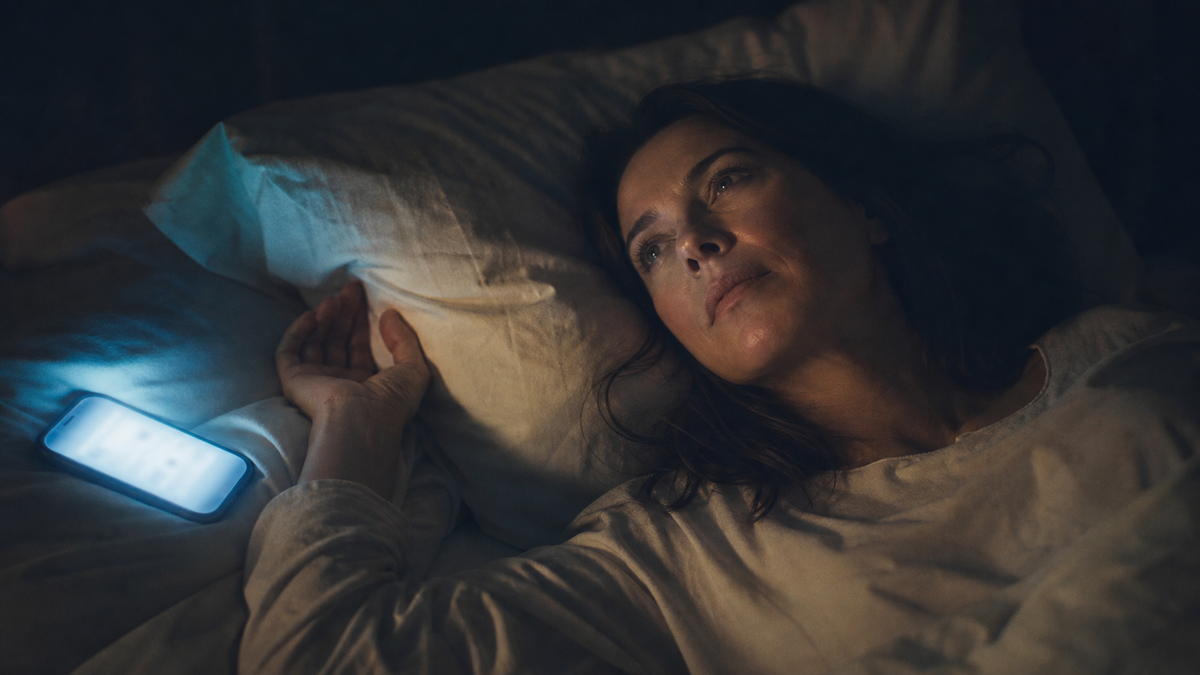
# The World Won’t Let You Sleep Either
The push alert woke you up at 2:14 AM. You don’t remember rolling over to check it. Your body did it for you. The headline had the shape of every other headline for the last four years — another strike, another reversal, another country you can’t quite locate on a map making a decision that will land on your grocery bill by Friday. The alert was off one country and onto the next. The news cycle kept going. Your nervous system did not get to clock out.
You weren’t asleep anyway.
You’ve been half-awake since the headlines started stacking. The election cycle that never really ended. The policy whiplash that arrives in waves you can’t prepare for. The climate disasters that keep arriving in places you know people. The NATO headlines that feel like weather — something happening to someone, somewhere, always. You read them, you feel them, and then you put the phone down and try to sleep. The phone picks itself up again twenty minutes later.
It’s not that the world is more dangerous than it was. It’s that the threat signal is now always on.
## The News Cycle Lives in Your Body
Here’s what the news doesn’t tell you about itself: it has optimized for the 2 AM scroll. The push alerts, the autoplay videos, the infinite scroll, the headline cadence designed to keep you reading past the point where you meant to stop — none of it is built for your information. It’s built for your attention. And your nervous system is not built to tell the difference.
A headline about a strike in a country you’ve never visited triggers the same threat-response cascade in your body as a strike in your own neighborhood would have triggered a hundred years ago. Cortisol. Heart rate variability drop. Sympathetic activation. The freeze-or-flee preparation. The body mobilizes the same chemistry whether the threat is on your doorstep or on a screen.
But there’s nowhere to flee to. And so the chemistry stays elevated. And the next alert arrives. And the next.
This is not a flaw in your resilience. It’s the system doing exactly what it was built to do, in an environment it was never built for.
## HRV Drops Before You Notice
You can feel the symptoms before you have language for them. The tightness in your chest when you read a headline about a country three time zones away. The way your jaw clenches at a notification you didn’t mean to look at. The restless sleep that doesn’t quite wake you but doesn’t quite rest you either. The mornings that start heavy for no reason you can name.
The biomarker story is consistent. People under sustained news exposure show measurably lower heart rate variability than people who are not. They spend more of their sleep in light stages and less in the deep, restorative ones. They wake up physiologically more stressed than when they lay down. Cortisol patterns flatten in ways that signal chronic sympathetic activation — the system is stuck in defensive mode, even during sleep.
This is the same sympathetic-activation pattern the [sleep system failure pillar](/sleep/sleep-system-failure) breaks down into four components — and it’s the one that fails first under sustained load. You can take the right supplements. You can get eight hours in bed. None of it moves the needle if the threat signal is still live.
You didn’t sign up for this. You turned on the alerts because you wanted to know. You opened the app because you wanted to stay informed. The body signed up for the cascade, and the cascade doesn’t have an off switch you can reach from the couch.
## The 24/7 News Cycle Is a Stress-Response Engineering Problem
The news cycle isn’t a journalism problem anymore. It’s a stress-response engineering problem. The product has been optimized to maximize time-on-platform, which means maximizing the duration of your threat response. Every feature — the autoplay, the infinite scroll, the push alerts, the “you might also like” recommendations — is designed to keep your nervous system in a low-grade activated state.
The platforms don’t call it that. They call it engagement.
Your body calls it survival mode.
The two are not compatible with sleep. They were never compatible with sleep. The only thing that’s changed is the delivery system — and the delivery system now lives in your pocket, on your nightstand, and inside your hand the moment your eyes close.
## The Reframe
Stop asking “why does the world feel so dangerous?”
Start asking “why does my body feel like the threat is here?”
The world is what it is. You can’t out-policy the headlines. You can’t out-scroll the cycle. You can’t undo the alert architecture of your phone from the couch at 2 AM.
What you can do is give your nervous system a credible signal that the on-call shift is over. Not a “don’t worry, it’s fine” — your body knows that’s not true. A signal that says: *I have seen what is coming. I have made what decisions I can. The day is done. The system can stand down.*
That’s what a real wind-down protocol is for. Not a checklist. A signal the body will accept.
## The Three Things That Actually Move the Needle
In order of leverage:
1. **Hard off-switch on the news cycle after a chosen hour.** Pick a time. Mine is 8 PM. After that, the news doesn’t get a slot. The headlines will still be there in the morning. They will not be improved by you reading them at 11.
2. **Phone out of the bedroom, or at minimum, face-down and on Do Not Disturb.** The 2 AM push alert is not information. It’s an interruption the body treats as an emergency.
3. **The Nightly Wind-Down Checklist.** Light reset, mental offload, physical signal. The ritual is the off-switch the nervous system has been waiting for.
None of these will change the world. They will not bring stability to the headlines. They will not fix the news cycle or the policy whiplash or the climate disasters. What they do is give your body a fighting chance to power down — which is the only way your sleep comes back.
The world is loud. Your sleep doesn’t have to be.
—
**If you want The Nightly Wind-Down Checklist as a printable PDF, [download it free here](/sleep/3-minute-nighttime-ritual).** Run it for seven nights. See what changes when the system finally gets a credible all-clear.
— David Bryan Smith
The Sleep Better Protocol
—
Start tonight — free
I recorded The Military Sleep Method — the aviator relaxation sequence, start to finish, as an 11-minute guided session. It comes with the Nightly Wind-Down Checklist: nine steps that tell your nervous system the day is over.
If it is every night rather than one night, The Sleep Reset Program is seven guided sessions — one per night — that retrain what your mind does at bedtime.
This article is for general relaxation and wellness. It is not medical advice. If you suspect a sleep disorder such as sleep apnea, please see your doctor.